

Updated October 2026: This article has been expanded with current technical guidance, clearer limitations, additional examples and new practical visuals while retaining its original URL and core reader flow.
Clean, fresh indoor air is important, and dust is one of the most visible reasons people consider an air purifier. A well-sized particle purifier can reduce airborne dust and fine particles, but it cannot remove dust that has already settled on furniture, floors, carpets or shelves. Understanding that distinction helps set realistic expectations.
This 2026 update keeps the original question and familiar structure but adds clearer technical context, practical decision rules and links to AirQualityIndex.org’s current AQI and PM2.5 resources.
Do air purifiers remove dust?
Yes, they can capture airborne particles that reach the filter. The amount removed from the room depends on filter efficiency, clean-air delivery, room size, placement, operating time and how quickly particles settle or are resuspended.
The purifier works only on particles that remain airborne long enough to pass through it. Source control and cleaning reduce the amount of material the purifier has to handle.
What is household dust made of?
Household dust can contain soil particles, textile fibres, skin flakes, pollen, pet dander, combustion particles and material tracked indoors. The mixture differs between homes and climates.
HEPA filtration and dust
High-efficiency particle filters can capture a wide range of particle sizes that pass through them. But the HEPA label alone does not tell you how quickly the whole room will be cleaned. CADR and airflow are essential.

Figure 1. Original AirQualityIndex.org decision-path visual for this updated article.
Why is there still dust on furniture?
Larger particles settle quickly and may land before reaching the purifier. Walking, vacuuming and handling fabrics can resuspend them. Filtration therefore complements cleaning rather than replacing it.
Visible dust is not the same as PM2.5
A room can look clean while invisible fine-particle concentrations are elevated. PM2.5 is defined by aerodynamic diameter and can come from smoke, traffic infiltration and cooking. A PM2.5 monitor can help evaluate this invisible fraction.
Best purifier specifications for dust
Prioritize adequate particle CADR, affordable replacement filters, an accessible pre-filter, low noise at useful airflow and good sealing. Do not choose solely from a ‘99.97%’ filter-efficiency claim.
Housekeeping still matters
Use entry mats, damp dusting and appropriate vacuuming to control settled material. Avoid dry sweeping that throws fine particles back into the air. Source control reduces the burden on the purifier.
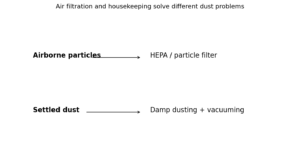
Figure 2. Original AirQualityIndex.org technical visual for this updated article.
Dust from outdoors and high AQI days
Outdoor dust and fine particles can enter through windows, doors and leakage. Check current PM10 and PM2.5 conditions. During high particle pollution, reduce avoidable entry and run adequate filtration for longer.
Pets and construction dust
Pet hair is usually captured first by a pre-filter or settles on surfaces; finer dander can remain airborne. Construction creates a broad particle range and may require source containment and cleaning in addition to filtration.
Dust, PM10 and PM2.5
Visible household dust often includes particles larger than PM2.5, while PM10 and PM2.5 describe size fractions used in air-quality monitoring. A purifier can capture many particle sizes that remain airborne long enough to reach it. Large debris that quickly falls to the floor is better handled by cleaning.
Can an air purifier reduce how often you dust?
It may reduce the amount of airborne material that eventually settles, particularly fine dust, but it will not eliminate dusting. Textiles, skin, tracked soil and activities inside the home continually create or resuspend material. Treat any promise of a ‘dust-free home’ from a purifier as unrealistic.
Choosing between a purifier and a better vacuum
They solve different pathways. A purifier continuously treats airborne particles; a good vacuum removes material from surfaces and carpets. Homes with significant dust usually benefit from both, plus source controls such as entry mats and keeping renovation dust contained.
2026 Technical Upgrade: What Readers Should Know
Air purifiers can reduce airborne dust particles, but they do not remove dust already settled on floors, shelves, bedding or furniture. Coarse particles settle relatively quickly, while smaller particles can remain suspended and be captured as room air passes through the filter. For a meaningful reduction in dust exposure, combine filtration with source control: use a well-maintained vacuum, damp-dust surfaces, wash bedding, manage pet dander and reduce infiltration through obvious gaps where practical. If outdoor PM2.5 is elevated, keeping windows closed during the worst period and using appropriately sized particle filtration can reduce infiltration-related particle exposure. The key metric is not whether a device says “HEPA” on the box, but whether it delivers enough filtered air for the room.
Practical decision checklist
- HEPA filtration captures airborne particles
- Settled dust still needs source control and cleaning
- Seal obvious infiltration pathways
- Vacuuming and damp dusting reduce reservoirs
Use the article guidance together with current outdoor AQI, the pollutant of concern, room size and the equipment manufacturer’s instructions. Source control and appropriate ventilation remain important; filtration is one part of indoor-air management.
Frequently asked questions
Why do I still see dust with a purifier?
Much household dust is coarse and settles before reaching the purifier. Foot traffic, bedding and cleaning can resuspend it. Filtration works best alongside cleaning and source control.
Will HEPA remove PM2.5?
A properly designed high-efficiency particle purifier can reduce fine particles, including PM2.5, as room air repeatedly passes through it. Adequate CADR and runtime are crucial.
Does a purifier replace vacuuming?
No. It does not remove settled material from carpets, floors and furniture. A well-maintained vacuum and damp cleaning remain important.
What about dust from outdoors?
Close obvious infiltration pathways where practical and consider outdoor AQI before opening windows. Filtration can reduce particles that enter, but controlling entry can reduce the burden.
Why does fan speed matter?
Higher speed generally moves more air through the filter and increases particle removal, although noise and energy use also rise. Choose a speed that provides adequate clean-air delivery for the conditions.
How outdoor AQI should change your indoor-air strategy
Outdoor air quality should influence how aggressively you use indoor filtration. When outdoor PM2.5 is low and weather conditions are suitable, ventilation can be an effective part of indoor-air management. When outdoor particle pollution rises, however, opening windows can increase indoor particle concentrations. Check the current AQI and, where available, the pollutant driving it rather than treating every AQI episode as the same problem. A particle purifier is most relevant when PM2.5, smoke, dust or other airborne particles are the concern; it is not a universal solution for gases, moisture, radon or carbon monoxide. During a high-PM episode, reduce avoidable particle entry, operate an appropriately sized purifier for longer periods and use a higher fan setting when tolerable. After outdoor conditions improve, ventilation may again become useful depending on indoor sources and weather.
Conclusion
Air purifiers are useful for airborne dust and fine particles, but they do not replace surface cleaning. Combine adequate CADR with source control and housekeeping. For severe dust or PM episodes, use local air-quality information to decide when to increase filtration.
References
- U.S. EPA — Guide to Air Cleaners in the Home — https://www.epa.gov/indoor-air-quality-iaq/guide-air-cleaners-home
- U.S. EPA — Air Cleaners and Air Filters in the Home — https://www.epa.gov/indoor-air-quality-iaq/air-cleaners-and-air-filters-home
- ENERGY STAR — Air Cleaners — https://www.energystar.gov/products/air_cleaners
- U.S. EPA — Ozone Generators that are Sold as Air Cleaners — https://www.epa.gov/indoor-air-quality-iaq/ozone-generators-are-sold-air-cleaners