

Updated October 2026: This article has been expanded with current technical guidance, clearer limitations, additional examples and new practical visuals while retaining its original URL and core reader flow.
How do you identify which air purifier size is best for your situation? Air purifiers come in many sizes, and manufacturers often advertise room coverage in square feet or square metres. That can be useful, but it does not tell the whole story. The amount of air in the room, the purifier’s Clean Air Delivery Rate (CADR), the fan speed you actually use and the pollution load all influence how effectively the unit can reduce airborne particles.
This 2026 update keeps the original question and familiar structure but adds clearer technical context, practical decision rules and links to AirQualityIndex.org’s current AQI and PM2.5 resources.
How big of an air purifier do I need?
Start with the room you actually want to clean. Measure the floor area and ceiling height, then calculate room volume. A 20 ft × 20 ft room with a 9 ft ceiling contains 3,600 ft³ of air. A room with the same floor area but a 12 ft ceiling contains one-third more air, so a purifier selected only from floor area can be undersized.
What is CADR and why does it matter?
CADR estimates the volume of contaminant-free air delivered by the purifier for a particle category. For fine-particle pollution, smoke CADR is particularly useful. A high-efficiency filter is important, but the whole machine must also move enough air. A small purifier can use excellent filter media and still be too weak for a large room.
Use room volume and ACH to size the purifier
A practical relationship is required CADR (CFM) = room volume (ft³) × target ACH ÷ 60. If the 3,600 ft³ example room is designed around 5 ACH, the required clean-air delivery is about 300 CFM. This does not mean one ACH target is universally correct for every home; it provides a transparent way to compare capacity.
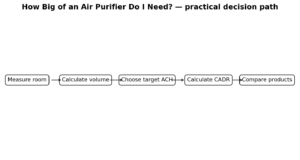
Figure 1. Original AirQualityIndex.org decision-path visual for this updated article.
Why advertised room coverage can be confusing
One manufacturer may quote a very large room at one air change per hour, while another quotes a smaller room at several air changes per hour. Both numbers can be technically derived from similar airflow. Always ask what clean-air delivery and air-change assumption sit behind the coverage claim.
What about high ceilings and open-plan rooms?
High ceilings increase room volume. Open-plan spaces can connect several zones, and open doors allow air to mix between rooms. Treat the connected volume realistically. In very large or irregular spaces, two appropriately placed units may distribute clean air more evenly than one unit with the same combined CADR.
Should you buy a larger purifier than the minimum?
Some practical margin can be useful because many people do not want to run a purifier at its loudest setting all day. A larger efficient unit may deliver the needed clean air at a quieter setting. During wildfire smoke or severe PM2.5, extra capacity can also help the purifier keep up with infiltration and door opening.
What specifications should you compare before buying?
Compare smoke/dust/pollen CADR, PM2.5 CADR where available, filter type, noise at useful speeds, operating power, replacement-filter model and cost, ozone-emissions information for electronic technologies, warranty and country availability. Avoid choosing from the HEPA label or maximum room-size claim alone.
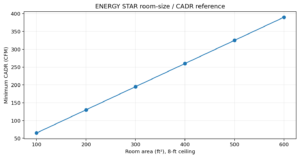
Figure 2. Original AirQualityIndex.org technical visual for this updated article.
Sizing examples for common rooms
For an 8-foot ceiling, ENERGY STAR provides approximate minimum CADR guidance of 65 CFM for 100 ft², 130 for 200 ft², 195 for 300 ft², 260 for 400 ft², 325 for 500 ft² and 390 for 600 ft². Higher ceilings increase the amount of air to be processed.
How outdoor AQI changes the operating strategy
Outdoor AQI does not change the physical room volume, but high particle pollution can increase the load entering the building. During severe PM2.5 or wildfire smoke, limit avoidable polluted-air entry and operate adequate filtration for longer periods. Check whether PM2.5 is the pollutant driving the AQI.
How to account for fan speed in real life
Most published CADR values describe a defined test condition, often at or near a high fan setting. In daily life, users may choose medium or sleep mode because of noise. If the lower speed is not independently rated, assume clean-air delivery is lower and leave practical capacity margin. This is one reason a purifier that only barely meets the calculated requirement on maximum speed may be frustrating to use.
One large purifier or two smaller purifiers?
For a simple rectangular room, one appropriately sized unit can work well. In a long, L-shaped or partially divided space, two units may improve distribution. Their particle clean-air delivery can be considered together for capacity, but poor placement can still leave stagnant zones. Multiple units also offer flexibility: one can be moved to a bedroom at night while another remains in the main living area.
What the future calculator should ask
A credible sizing calculator should request floor area, ceiling height, room type, whether the space is open to adjacent rooms, desired operating noise, typical outdoor particle exposure and major indoor particle sources. It should show the formula and assumptions, then recommend a minimum specification rather than immediately pushing a brand.
2026 Technical Upgrade: What Readers Should Know
Room-size labels are useful starting points, but they can hide the assumptions behind the number. A better specification-first method uses room volume and clean-air delivery rate (CADR). Approximate air changes per hour (ACH) can be estimated as CADR in cubic feet per minute multiplied by 60 and divided by room volume in cubic feet. For a 20 × 20 ft room with a 9 ft ceiling, volume is 3,600 ft³. A purifier delivering 300 CFM provides about 5 ACH before allowing for real-world mixing and leakage. Higher ceilings, open-plan layouts, smoke events and heavy particle loads justify additional capacity. ENERGY STAR’s current sizing table uses minimum CADRs of 65, 130, 195, 260, 325 and 390 CFM for 100–600 ft² rooms with 8-ft ceilings. Use these as estimation points rather than guarantees. Oversizing can be useful because a larger unit may achieve the required clean-air rate at a quieter fan setting.
Practical decision checklist
- Measure room volume, not floor area alone
- Use smoke CADR for fine particles
- Higher ceilings require more clean air
- Target ACH should reflect the pollution challenge
Use the article guidance together with current outdoor AQI, the pollutant of concern, room size and the equipment manufacturer’s instructions. Source control and appropriate ventilation remain important; filtration is one part of indoor-air management.
Frequently asked questions
Is a larger purifier always better?
Extra capacity can be useful because it gives more clean-air delivery and may let you operate at a quieter speed, but extremely oversized equipment can cost more and take more space. Compare CADR, noise and energy efficiency rather than buying on room-size marketing alone.
Does ceiling height matter?
Yes. Floor area does not capture air volume. A room with a 10- or 12-foot ceiling contains substantially more air than the same floor area with an 8-foot ceiling, so a higher CADR is needed for the same approximate ACH.
Which CADR should I compare?
For fine particle pollution such as smoke and PM2.5, smoke CADR is particularly useful. Dust and pollen CADRs can also be reported. Make sure the figure is independently tested and not merely a manufacturer airflow claim.
What about open-plan rooms?
Treat connected spaces conservatively. Air can move between them, but walls, corridors, furniture and pressure differences reduce ideal mixing. Use the total connected volume when the spaces are genuinely open and consider more than one unit for separated zones.
Should I size for average or bad-air days?
If wildfire smoke, severe outdoor PM2.5 or frequent indoor particle sources are important, size with those demanding periods in mind. A unit that is barely adequate on a clean day may not provide the clean-air rate you want during a pollution episode.
Conclusion
The best purifier size is the one that supplies enough clean air for the actual room volume at a speed you can realistically use. Measure the room, compare CADR, understand the ACH assumption and include high ceilings, connected spaces, noise and pollution conditions.
References
- U.S. EPA — Guide to Air Cleaners in the Home — https://www.epa.gov/indoor-air-quality-iaq/guide-air-cleaners-home
- U.S. EPA — Air Cleaners and Air Filters in the Home — https://www.epa.gov/indoor-air-quality-iaq/air-cleaners-and-air-filters-home
- ENERGY STAR — Air Cleaners — https://www.energystar.gov/products/air_cleaners
- U.S. EPA — Ozone Generators that are Sold as Air Cleaners — https://www.epa.gov/indoor-air-quality-iaq/ozone-generators-are-sold-air-cleaners