
Updated October 2026: This article has been expanded with current technical guidance, clearer limitations, additional examples and new practical visuals while retaining its original URL and core reader flow.
If you have pets, cook frequently or live in a home with persistent odors, it is natural to wonder whether an air purifier can help. The answer depends on what is causing the smell. Particle filters and gas-removal media work differently, so a purifier that is excellent for PM2.5 may still be weak at removing gaseous odors.
This 2026 update keeps the original question and familiar structure but adds clearer technical context, practical decision rules and links to AirQualityIndex.org’s current AQI and PM2.5 resources.

Do air purifiers remove odors?
Some can reduce certain odors if they contain suitable gas-phase media such as activated carbon. A HEPA particle filter by itself is not designed to remove most gases or volatile organic compounds.
The correct question is always ‘what is causing the odor?’ Once the source and pollutant type are known, the appropriate combination of source control, ventilation and filtration becomes clearer.
Why HEPA and odor removal are different
HEPA media captures particles passing through the filter. Odor molecules are gases and require adsorption or another gas-treatment mechanism. CADR ratings are primarily particle-performance ratings.
How activated carbon works
Activated carbon has a large internal surface area that can adsorb some gaseous pollutants. Performance depends on the contaminant, carbon type, amount of media, airflow and contact time.
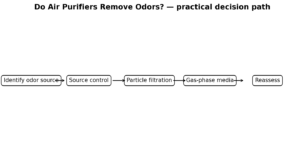
Figure 1. Original AirQualityIndex.org decision-path visual for this updated article.
Why carbon quantity matters
A thin carbon-coated sheet may have much less capacity than a substantial bed of sorbent. When odor control is important, look for disclosed carbon mass or media design rather than accepting a generic ‘3-stage filtration’ claim.
Cooking odors
Use a range hood vented outdoors when possible because source capture is more effective than cleaning pollutants after they spread through the room. A purifier can supplement particle and odor control.
Pet odors
Filtration can help with airborne particles and some gaseous odors when suitable carbon is present, but cleaning bedding, litter areas and other sources remains essential.
Smoke odors and wildfire smoke
Smoke contains both particles and gases. A high-CADR purifier can reduce the particle component; gas media may help with some odors. Do not describe any consumer purifier as removing every component of wildfire smoke.
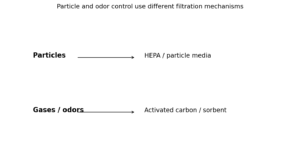
Figure 2. Original AirQualityIndex.org technical visual for this updated article.
When an odor indicates a larger problem
Musty smells can indicate moisture or mold; combustion odors can indicate unsafe equipment; solvent smells may reflect VOC sources. Do not use fragrance or filtration to mask a source that needs correction.
How to choose an odor-focused purifier
Compare particle CADR if particles are also present, disclosed gas-media quantity/type, replacement cost and frequency, airflow, noise and ozone information. Be cautious with vague deodorization claims.
Why there is no simple CADR for odors
Consumer CADR ratings are designed around particle removal, so it is misleading to size odor removal from a smoke CADR alone. Gas removal depends on sorbent chemistry, mass and contact time. This is why the Air Quality Advisor should use a qualitative gas-media specification rather than pretending outdoor AQI can calculate carbon-bed capacity.
When ventilation is better than recirculation
If the odor comes from an indoor source and outdoor air is clean, ventilation can remove gases instead of repeatedly recirculating them. During severe outdoor smoke or ozone, ventilation decisions become more complicated. Always consider both the indoor source and outdoor conditions.
Carbon filter replacement
Gas media can become saturated. A return of odor may indicate that carbon capacity is exhausted even when the particle filter still looks usable. Product reviews should report whether the carbon stage can be replaced separately and what it costs.
2026 Technical Upgrade: What Readers Should Know
Odor control is different from particle control. HEPA media can capture particles associated with smoke, cooking and pets, but many odors are caused by gases or volatile organic compounds that pass through particle filters. Gas-phase removal generally relies on activated carbon or another sorbent, and EPA notes that effectiveness depends in part on having a substantial amount of material. There is no widely used CADR-style rating for gas removal comparable with particle CADR, so buyers should be cautious about strong odor claims based on a very thin carbon sheet. Source control remains the first step: remove spoiled material, control smoke, clean pet areas, repair moisture problems and ventilate when outdoor air is suitable.
Practical decision checklist
- HEPA targets particles, not most gases
- Activated carbon can adsorb selected gases
- More sorbent media generally gives more capacity
- Source removal and ventilation remain important
Use the article guidance together with current outdoor AQI, the pollutant of concern, room size and the equipment manufacturer’s instructions. Source control and appropriate ventilation remain important; filtration is one part of indoor-air management.
Frequently asked questions
Why can I still smell something with HEPA?
HEPA is designed for particles. Many odors are gaseous molecules that require source removal, ventilation or adequate gas-phase sorbent media such as activated carbon.
Does more carbon matter?
Generally, more suitable sorbent material provides more capacity than a very thin carbon sheet, though performance also depends on the gas, contact time and filter design.
Can a purifier remove cooking smells?
It may reduce particles and some gases if it has appropriate media, but kitchen exhaust and source control are usually more effective first steps.
What about pet odors?
Clean litter, bedding and other sources first. Filtration can supplement source control, particularly for airborne dander particles and selected odors when adequate carbon is present.
Is there a CADR for odors?
Standard CADR ratings are particle-focused. Gas and odor removal does not have the same widely used consumer performance rating, so evaluate sorbent quantity and credible testing carefully.
How outdoor AQI should change your indoor-air strategy
Outdoor air quality should influence how aggressively you use indoor filtration. When outdoor PM2.5 is low and weather conditions are suitable, ventilation can be an effective part of indoor-air management. When outdoor particle pollution rises, however, opening windows can increase indoor particle concentrations. Check the current AQI and, where available, the pollutant driving it rather than treating every AQI episode as the same problem. A particle purifier is most relevant when PM2.5, smoke, dust or other airborne particles are the concern; it is not a universal solution for gases, moisture, radon or carbon monoxide. During a high-PM episode, reduce avoidable particle entry, operate an appropriately sized purifier for longer periods and use a higher fan setting when tolerable. After outdoor conditions improve, ventilation may again become useful depending on indoor sources and weather.
Conclusion
An air purifier can help with some odors, but only when the filtration technology matches the pollutant. Use source control first, HEPA for particles and substantial gas-phase media where appropriate. The future Advisor should use a specification selector rather than inventing a gas-removal score from outdoor AQI.
References
- U.S. EPA — Guide to Air Cleaners in the Home — https://www.epa.gov/indoor-air-quality-iaq/guide-air-cleaners-home
- U.S. EPA — Air Cleaners and Air Filters in the Home — https://www.epa.gov/indoor-air-quality-iaq/air-cleaners-and-air-filters-home
- ENERGY STAR — Air Cleaners — https://www.energystar.gov/products/air_cleaners
- U.S. EPA — Ozone Generators that are Sold as Air Cleaners — https://www.epa.gov/indoor-air-quality-iaq/ozone-generators-are-sold-air-cleaners