
Updated October 2026: This article was originally published in June 2022 and has been expanded with additional guidance on CADR, room size, AQI conditions, fan speed, energy use, placement and air purifier safety.
Most people know that air purifier filters eventually need maintenance or replacement, but there is no single interval that fits every purifier and every home. Filter design, hours of operation, airflow, smoke, dust, pets, cooking and local pollution can all change how quickly a filter loads or loses useful performance.
This 2026 update keeps the original question and familiar structure but adds clearer technical context, practical decision rules and links to AirQualityIndex.org’s current AQI and PM2.5 resources.

How long do air purifier filters last?
The correct starting point is the manufacturer’s specification for the exact filter model. Some filters are designed for a few months of use and others for a year or longer. Treat a generic 6–12 month rule only as a rough range, not a universal replacement schedule.
Do not change a filter merely because a calendar reminder appears if the manufacturer provides a more specific method, and do not extend use indefinitely to save money when airflow or performance has clearly deteriorated.
Why do air purifier filters need to be replaced?
Particle filters accumulate material as air passes through them. As loading increases, airflow and system performance can change. Gas-phase media such as activated carbon age differently because adsorption capacity can be exhausted even when the media does not look visibly dirty.
How often should you replace your air purifier filter?
Follow the product manual and filter indicator, then consider your actual operating environment. Continuous use during wildfire smoke or severe winter PM2.5 can load a particle filter much faster than occasional use in a relatively clean environment.
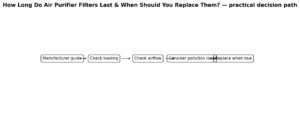
Figure 1. Original AirQualityIndex.org decision-path visual for this updated article.
What are the signs that you need to replace your air purifier filter?
Possible signs include a replacement indicator, visibly heavy loading where inspection is permitted, reduced airflow at the same setting, worsening particle control, or return of odors when gas media are exhausted. Do not rely on appearance alone.
HEPA filters, pre-filters and carbon filters are different
Pre-filters capture larger debris and may be washable or vacuumable only when the manufacturer permits it. HEPA or other fine-particle filters capture smaller particles. Activated carbon targets certain gases and odors. Each component can therefore have a different maintenance schedule.
What shortens filter life?
Wildfire smoke, tobacco smoke, high outdoor PM2.5, construction dust, frequent cooking, pets and long operating hours can increase loading. A useful future replacement estimator could combine runtime with local AQI history, but it must still account for indoor sources.
Should you vacuum or wash a HEPA filter?
Only if the manufacturer explicitly says the filter is washable or cleanable. Washing a non-washable fine-particle filter can damage the media or seals. Aggressive vacuuming can also damage some filters. Follow the instructions for the exact model.
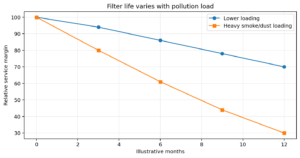
Figure 2. Original AirQualityIndex.org technical visual for this updated article.
How replacement cost changes the real price of a purifier
A low purchase price can be misleading if proprietary filters are expensive or difficult to obtain. Compare the replacement-filter SKU, price, expected interval and local availability. Annualized filter cost should be part of every technical product review.
Can local AQI help predict filter replacement?
Local outdoor PM2.5 history can provide useful context because outdoor particles infiltrate buildings, but it cannot determine filter life by itself. Building leakage, indoor sources, fan speed and operating hours matter too.
Why filter indicators are not all the same
Some purifiers estimate filter life from operating hours, while more advanced systems may consider fan speed or pressure. An indicator is useful, but it is not a laboratory measurement of remaining filter capacity. Heavy smoke, renovation dust or unusual pollution may justify earlier inspection or replacement according to the manual.
What happens to airflow as a particle filter loads?
Captured particles increase resistance through the filter. Depending on the fan and control system, airflow may fall or the fan may work harder to maintain it. Lower airflow means lower effective clean-air delivery. This is why filter condition can affect room performance even when the filter is still capturing particles efficiently at the media surface.
Replacement-filter availability is an SEO and buying issue
Before buying a purifier, search for the exact replacement-filter model in your country. A technically good purifier becomes difficult to own if filters are unavailable or must be imported at high cost. AirQualityIndex.org’s future product database should therefore treat filter availability and annualized cost as first-class specifications.
2026 Technical Upgrade: What Readers Should Know
Filter life is not a universal calendar interval. It depends on particle loading, fan speed, hours of operation, outdoor pollution infiltration, pets, smoking, cooking aerosols and the design of the filter itself. A lightly used purifier in a relatively clean home may load slowly; the same filter during a severe smoke season can load much faster. Treat the manufacturer’s interval and electronic indicator as maintenance prompts, then check the model-specific instructions. Washable prefilters may be cleaned as directed, but HEPA media should not be vacuumed or washed unless the manufacturer explicitly permits that procedure. EPA notes that overloaded filters do not work well, so delayed replacement can reduce airflow and effective clean-air delivery.
Practical decision checklist
- Prefilters may need frequent cleaning
- HEPA life depends on loading and runtime
- Smoke and dust can shorten useful life
- Do not wash HEPA media unless explicitly designed for it
Use the article guidance together with current outdoor AQI, the pollutant of concern, room size and the equipment manufacturer’s instructions. Source control and appropriate ventilation remain important; filtration is one part of indoor-air management.
Frequently asked questions
Can I vacuum a HEPA filter?
Do not assume so. Vacuuming can damage delicate media or seals and may not restore performance. Follow the manufacturer’s instructions; cleaning a washable prefilter is different from cleaning the main HEPA filter.
Why does my filter look dirty early?
Visible loading can rise quickly with smoke, pets, renovation dust, cooking particles or outdoor pollution infiltration. Color alone is not a perfect measure, but rapid loading is a reason to inspect the system and source conditions.
Can I extend filter life by running on low?
Lower speed moves less air and may reduce loading per hour, but it also reduces clean-air delivery. The objective is adequate filtration, not maximum calendar life of the filter.
Do carbon filters need replacement too?
Yes. Sorbent media has finite capacity and can become saturated. Odor breakthrough can be one practical sign, but replacement guidance depends heavily on the amount and type of carbon and pollutant load.
What if replacement filters are unavailable?
Filter availability is part of the purchase decision. A purifier that cannot obtain correctly fitting replacement media may lose sealing and performance. Check model numbers and long-term filter supply before buying.
How outdoor AQI should change your indoor-air strategy
Outdoor air quality should influence how aggressively you use indoor filtration. When outdoor PM2.5 is low and weather conditions are suitable, ventilation can be an effective part of indoor-air management. When outdoor particle pollution rises, however, opening windows can increase indoor particle concentrations. Check the current AQI and, where available, the pollutant driving it rather than treating every AQI episode as the same problem. A particle purifier is most relevant when PM2.5, smoke, dust or other airborne particles are the concern; it is not a universal solution for gases, moisture, radon or carbon monoxide. During a high-PM episode, reduce avoidable particle entry, operate an appropriately sized purifier for longer periods and use a higher fan setting when tolerable. After outdoor conditions improve, ventilation may again become useful depending on indoor sources and weather.
Conclusion
Replace filters based on the manufacturer’s guidance, operating conditions and performance—not a universal date. Maintain pre-filters correctly, track heavy smoke/dust periods, and include replacement cost in the purchase decision. AirQualityIndex.org can eventually add filter-cost and replacement fields to its product database.
References
- U.S. EPA — Guide to Air Cleaners in the Home — https://www.epa.gov/indoor-air-quality-iaq/guide-air-cleaners-home
- U.S. EPA — Air Cleaners and Air Filters in the Home — https://www.epa.gov/indoor-air-quality-iaq/air-cleaners-and-air-filters-home
- ENERGY STAR — Air Cleaners — https://www.energystar.gov/products/air_cleaners
- U.S. EPA — Ozone Generators that are Sold as Air Cleaners — https://www.epa.gov/indoor-air-quality-iaq/ozone-generators-are-sold-air-cleaners